


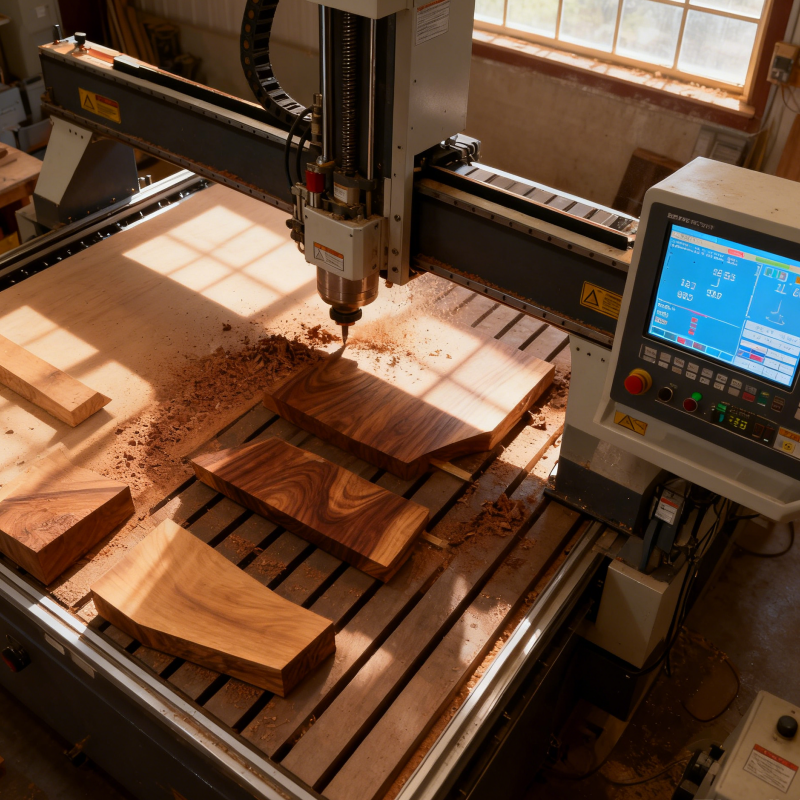
Throughout the development of the woodworking industry, efficiency and precision have always been core goals pursued by practitioners. From the “slow and meticulous” work of traditional hand saws and planes to the “precise and efficient” CNC woodworking machines of today, the iteration of tools has directly driven the industry’s upgrade. Today, woodworking machines are no longer simple auxiliary tools, but have become a new benchmark for reshaping woodworking production models and defining industry efficiency standards.
The traditional woodworking industry has long been plagued by efficiency bottlenecks. Older generations of carpenters processed wood solely with hand tools; cutting and sanding a single plank often took hours, and the precision of the finished product highly depended on individual skill. For furniture factories producing in bulk, the limitations of manual operation were even more pronounced: not only was production capacity low, but there were also problems such as inconsistent finished product specifications and high wastage rates. With the increasing market demand and ever-shortening delivery cycles, the traditional model can no longer meet the industry’s development needs, making the widespread adoption of woodworking machines an inevitable trend.
The efficiency advantage of modern woodworking machines stems primarily from breakthroughs in core technologies. The application of CNC systems has enabled woodworking machines to achieve automated operation with millimeter-level precision. Simply inputting processing parameters into the system allows the machine to continuously complete multiple processes such as cutting, drilling, and carving, without repeated manual intervention. For example, a typical panel cutting machine takes about 20 minutes to manually cut a standard board, while a CNC panel cutting machine can advance 3-5 meters per minute, cutting a board in just 2-3 minutes – nearly ten times the efficiency. Simultaneously, the machine’s continuous operation capability significantly reduces downtime; some fully automated production lines can even operate 24 hours a day, completely breaking the time constraints of manual operation.
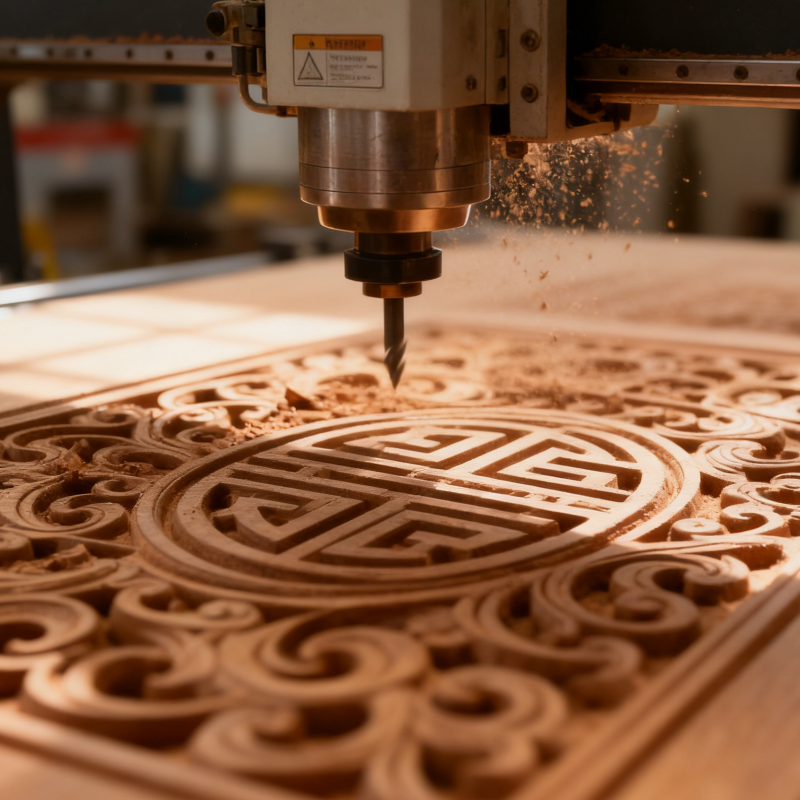
Besides increased speed, woodworking machines also reduce production losses through process optimization, indirectly improving overall efficiency. In traditional manual processing, the loss rate of wood due to measurement errors and operational mistakes is often as high as 10%-15%, while woodworking machines, with their precise computer-aided design and layout systems, can maximize the use of board area, controlling the loss rate to within 3%. After introducing a CNC woodworking production line, a solid wood furniture factory saved nearly one million yuan annually by reducing wood waste alone. Simultaneously, its production capacity tripled, order delivery time decreased from 15 days to 5 days, and customer satisfaction significantly improved.
The efficiency revolution of woodworking machines is also reflected in their effortless handling of complex processes. Intricate carvings and curved surface processing that previously required experienced carpenters several days to complete can now be finished within hours using CNC carving woodworking machines, simply by importing design drawings, with consistent detail and precision. This advantage is particularly important in today’s market where customized woodworking demands are growing. It frees personalized design from the constraints of manual skills, satisfying unique customer needs while enabling mass production, perfectly balancing the conflict between customization and efficiency.
With continuous technological upgrades, intelligent woodworking machines are becoming a new development direction. Woodworking machines equipped with IoT technology can upload production data in real time, allowing managers to monitor equipment operation and production progress via mobile phones. Artificial intelligence systems can automatically adjust processing parameters based on wood material, further improving processing accuracy and efficiency. These innovations have amplified the efficiency advantages of woodworking machines, driving the woodworking industry’s transformation from a “labor-intensive” to a “technology-intensive” model.
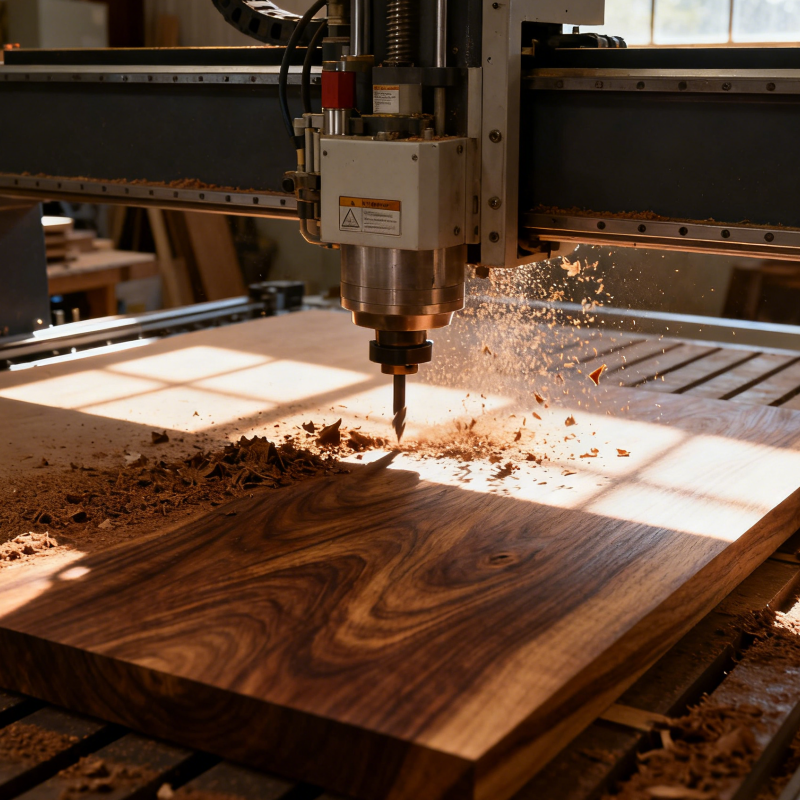
From traditional handcrafting to modern machinery, the development of woodworking machines represents not only an iteration of tools but also a revolution in the industry’s production philosophy. With its advantages of precision, speed, and low consumption, it has redefined the efficiency standards of woodworking production, injecting new momentum into the industry’s development. In today’s pursuit of high-quality development, this new benchmark of efficiency, the woodworking machine, will undoubtedly lead the woodworking industry towards a smarter and more efficient future.